
Every leader today is navigating a storm.
Culture, politics, education, business, faith — all of it is shifting faster than most of us can track. Add the rise of AI and virtual reality, and the ground keeps moving beneath our feet. The old assumptions don’t hold the way they used to. The familiar landmarks keep disappearing.
And in the middle of that, leaders are still expected to know where we’re going.
Here’s what I’ve come to believe: in times like these, what we want is a map. What we actually need is a compass.
A map offers certainty. It promises the whole route laid out in advance — every turn, every landmark, a guaranteed arrival. Maps are wonderful when the terrain is known and stable.
But we are not leading in stable terrain.
We’re leading in a storm. And in a storm, the map fails you. The landmarks vanish. The route you memorized no longer matches the ground in front of you.
A compass works differently. It doesn’t eliminate the storm or clear the fog. It doesn’t promise the way will be smooth. It simply points toward true north — and lets you take the next faithful step, even when you can’t see far ahead.
Nelson Mandela understood this better than almost anyone. When he walked out of prison after twenty-seven years, he had no map for rebuilding a fractured nation. No one did. The path forward was uncertain, fragile, and genuinely dangerous. The country could have descended into civil war.
But he had a compass. He oriented himself — and a nation — toward reconciliation over revenge, unity over division. He couldn’t see the whole road. He couldn’t guarantee the outcome. But he knew which direction was true north, and he led toward it one step at a time.
That’s what leadership in uncertainty actually requires.
Not a perfect strategy for a future no one can predict. Not the illusion of certainty in a world that offers none. But a clear sense of true north — your deepest values, your core convictions, the principles you won’t compromise even when everything around you is in flux. And the courage to keep moving toward it when the way isn’t clear.
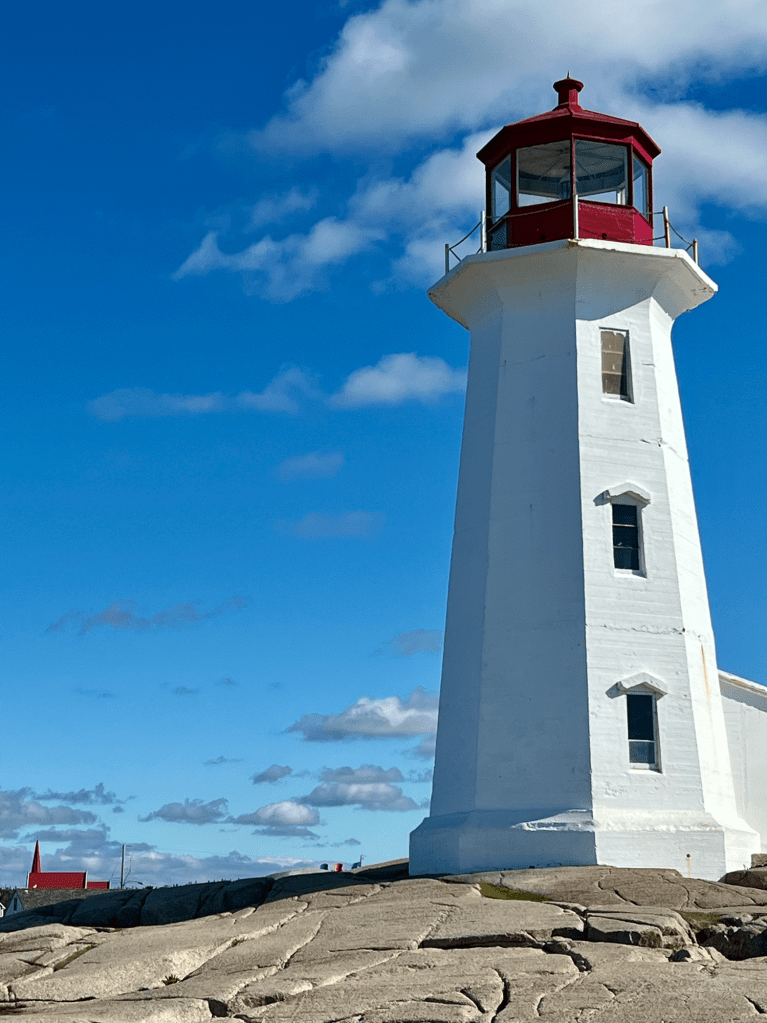
Think of a lighthouse. It doesn’t chase the ship through the storm. It doesn’t move at all. That’s precisely what makes it useful. It stands fixed while everything around it heaves and shifts — and because it holds its position, it becomes the one thing a storm-tossed vessel can steer by.
The best leaders are like that. Not frantically adjusting to every shift in the wind, but anchored to something steady enough that others can find their bearings by it.
The leaders who will matter most in the years ahead won’t be the ones with the most detailed maps.
They’ll be the ones who know their true north — and have the courage to hold it steady through the storm.
So here’s the question I’d leave you with:
When everything around you is changing, what is your true north — the thing that keeps you oriented no matter how hard the wind blows?
I’d genuinely value your perspective.
 EnSpirit