

What Transformational Leaders Understand About Direction
One of the most unsettling realities in leadership is this:
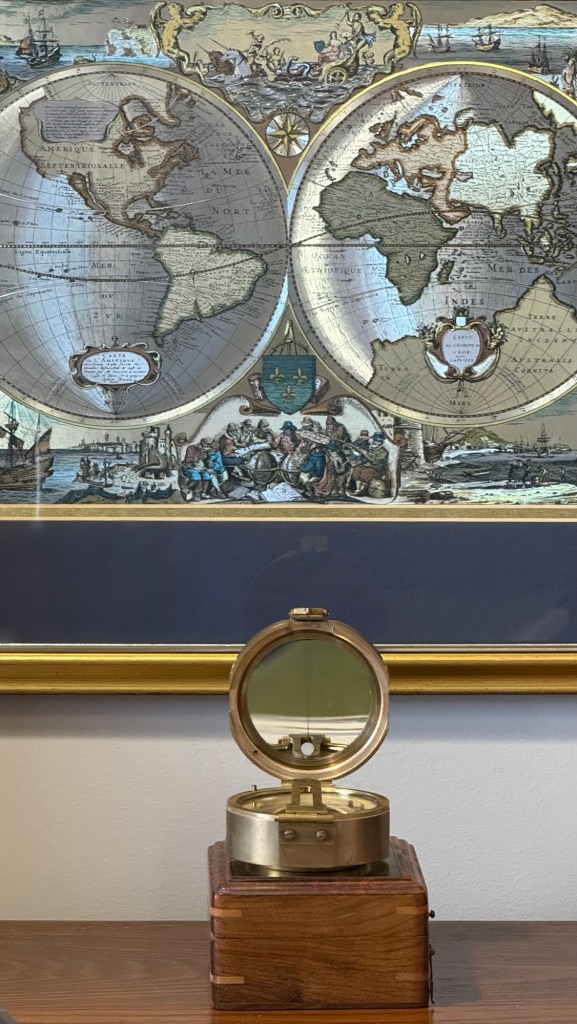
You rarely receive a map.
There is no detailed blueprint for navigating disruption, rebuilding culture, leading through institutional change, or redefining purpose after setback. There is no guaranteed five-step sequence for transformation.
What leaders are given instead is something far more powerful — and far less comfortable.
A compass.
And the difference matters.
A map offers certainty. A compass offers orientation.
In stable environments, a map may suffice. But in seasons of disruption — organizational transition, cultural tension, political fracture, market volatility — maps become outdated quickly.
Transformational leadership requires something deeper than strategy.
It requires moral and directional clarity.
Why the Compass Matters in Leadership
A compass does not eliminate ambiguity.
It does not flatten complexity.
It does not promise ease.
What it does is keep you aligned.
It keeps you oriented toward:
Core values Mission integrity Long-term vision Human dignity
This is what distinguishes managerial leadership from transformational leadership.
Managers execute the map.
Transformational leaders guard the compass.
Nelson Mandela: Leadership by Compass
When Nelson Mandela emerged from twenty-seven years in prison, he did not possess a detailed map for reconstructing South Africa. The nation was fractured, wounded, and volatile. Political retaliation would have been the expected route.
Instead, Mandela chose reconciliation over revenge.
He oriented his leadership toward unity, justice, and shared future. That compass — not a detailed roadmap — shaped one of the most significant national reinventions in modern history.
He did not control every outcome.
He controlled direction.
And direction reshaped destiny.
In each case, the map was incomplete.
But the compass was clear.
What This Means for Leaders Today
In business, education, nonprofit work, and faith communities, we are leading in environments that feel increasingly unpredictable.
The temptation is to wait for clarity before acting.
But transformational leaders understand something essential:
Clarity often emerges through movement.
You do not need the full map to begin again.
You need alignment.
When facing transition, ask:
What is the non-negotiable value that guides us? What mission are we unwilling to compromise? What kind of culture are we building? What is “true north” for this organization?
When leaders hold steady to orientation, teams can move forward even in fog.
The Work of Beginning Again
Beginning again in leadership is not about rebranding.
It is about reorienting.
It is about rediscovering:
Why we exist. Who we serve. What matters most.
Maps change. Markets shift. Structures evolve.
But the compass — mission, values, ethical grounding — must remain steady.
If you are in a season of transition, disruption, or reinvention:
Do not wait for the perfect map.
Strengthen your compass.
Transformation begins there.
 EnSpirit