
Begin Again Series
By Robert White | Enspirit.blog
Have you ever felt like you reached a point where the story you thought you were living had ended?
A job ends. A role changes. A season closes. And suddenly the question rises: What now?
It’s one thing to begin again when we’re young and the future stretches wide before us. It feels entirely different when we’ve already lived a long chapter, poured ourselves into a calling, stood in a role that defined us. Reinvention later in life can feel less like adventure and more like loss—less like possibility and more like an ending we didn’t choose.
That’s why the life of Jimmy Carter offers such a compelling picture of what it means to begin again.

When Carter left the presidency in 1981, his time in office had been marked by significant challenges. The hostage crisis. An economic recession. Public approval that had declined sharply. Many would have assumed his most meaningful work was behind him. For some leaders, leaving such a visible role might have meant retreating quietly into private life, nursing wounds, writing memoirs, playing the elder statesman at a safe distance.
But for Carter, it marked the beginning of something else entirely—a new chapter that would reshape his legacy and touch lives around the world in ways the presidency never could.
I think about this often. How easy it is to believe that our best days are behind us. That the main act is over and what remains is just the slow curtain call. But Carter’s story tells us something different. It whispers that sometimes the most important work of our lives begins exactly when we think it’s ending.
When Success Changes Shape
After the White House, Carter did not measure success by position, power, or prestige. Instead, he and Rosalynn founded the Carter Center, dedicating themselves to promoting human rights, resolving conflicts, strengthening democracy, and improving health across the globe. They worked to eradicate diseases in forgotten corners of the world. They monitored elections. They built peace where others had given up.
In doing so, Carter quietly redefined what success looked like. It was no longer about holding the highest office, but about serving the deepest needs. Not about being seen, but about seeing—really seeing—the suffering of others and responding with his whole life.
Reinvention often begins right here, with this shift. It starts when we ask a different question—not “How do I get back to where I was?” but “What kind of life do I want to live now?” Not “How do I recover what I lost?” but “What am I being called toward in this new season?”
These aren’t easy questions. They require us to release our grip on old definitions of success and open our hands to something we can’t yet see clearly.
The Difference in a Chapter and a Book
Here’s what strikes me most about Carter’s story: he didn’t abandon who he was. He didn’t become someone else. He carried forward the threads of his deepest self and wove them into a new design. When his chapter as president was over, he did not allow that to be the last chapter nor did he allow that to define his life.  He started a new chapter. 
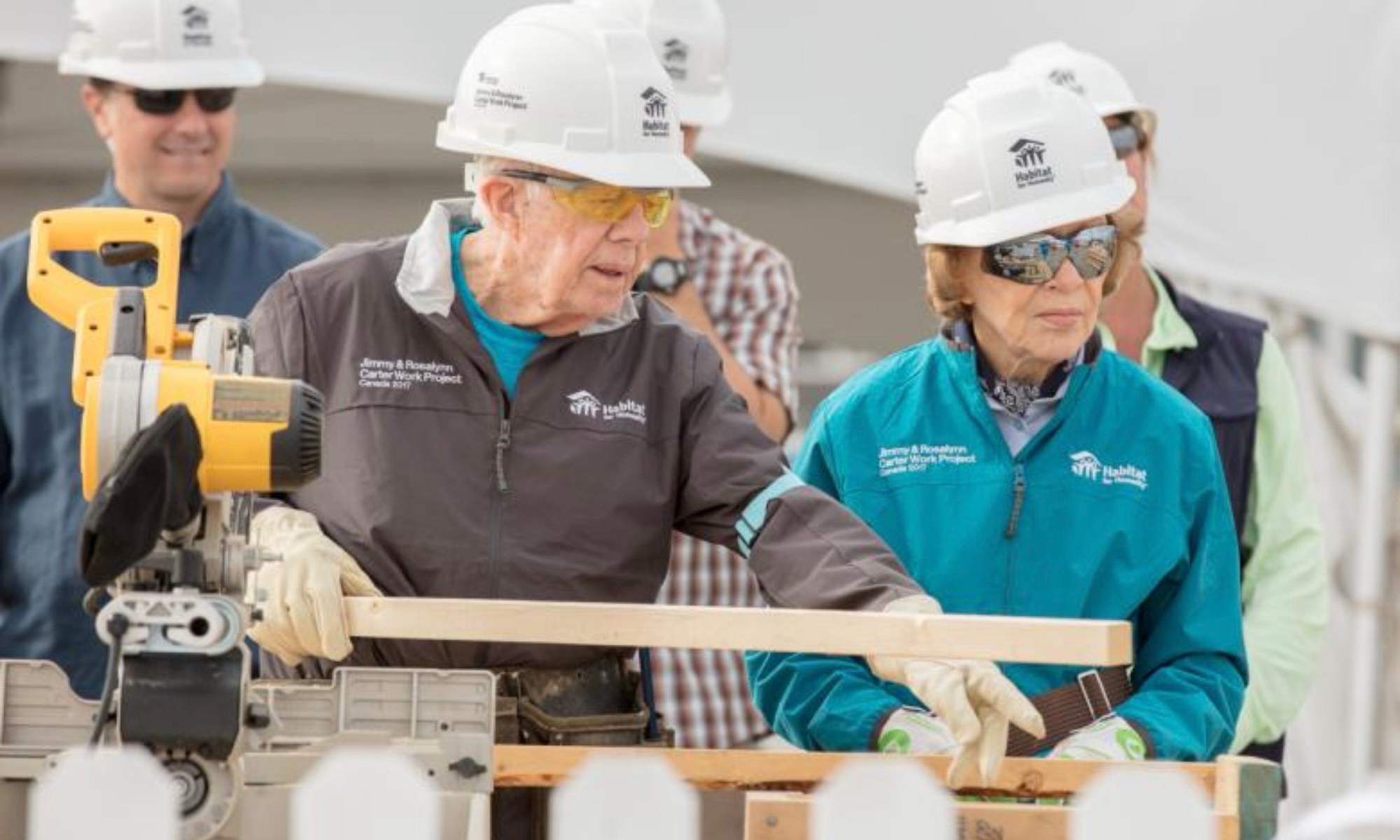
His deep faith, his background as a farmer, his commitment to justice and peace—all of it found expression in this second act, only now freed from the constraints and compromises of political office. He worked alongside Habitat for Humanity, swinging a hammer well into his later years, building homes with his own hands. He taught Sunday school in his small Georgia town. He wrote and published over 30 books. He showed up in ordinary places with extraordinary consistency.
Beginning again rarely means starting from scratch or becoming someone unrecognizable. More often, it means gathering the threads of who we have become—the experiences, the values, the lessons learned—and weaving them into a new pattern. It means starting a new chapter. It means trusting that nothing is wasted, that every season has prepared us for the next.
The Humility to Serve
One of the most striking aspects of Carter’s post-presidential life was his humility. There is something deeply moving about a former president willing to do simple, unseen work—not for applause or legacy-building, but for love.
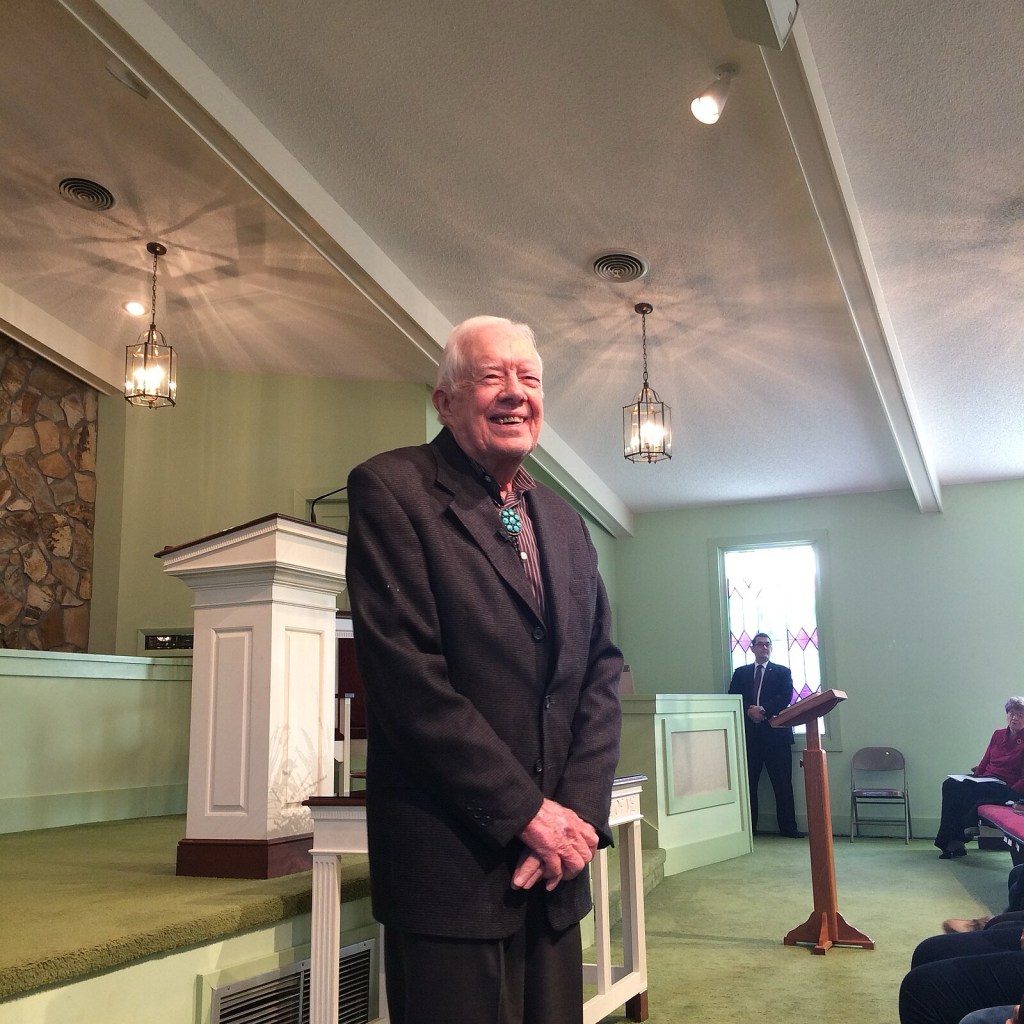
I was reminded of this in a personal way years ago when my wife and I had the opportunity to visit the church in Georgia where Jimmy and Rosalynn Carter were active members. President Carter was teaching his Sunday school class that morning, as he had done almost every Sunday for decades.
Jimmy Carter carried no sense of status or self-importance as he stood to teach his Sunday class. Just a former president faithfully serving his local church, teaching, listening, asking questions, encouraging others in their faith. That moment left a lasting impression on me—a quiet picture of a man who had embraced a new chapter not defined by power, but by service, presence, and purpose.
Reinvention often asks us to let go of old titles and embrace new roles that feel smaller, quieter, less visible. That can be hard, especially if we’ve grown accustomed to recognition or influence. But Carter’s life reminds us that no act of service is too small when it flows from purpose. That meaning doesn’t depend on an audience. That the most important work often happens in rooms where no one is keeping score.
Beginning again may mean stepping into work that looks different than before—humbler, simpler, less impressive on paper—and trusting that significance isn’t measured by visibility.
A Life That Kept Unfolding and Growing
Carter’s later years were not a slow winding down, but a continued unfolding. A deepening. His efforts with the Carter Center eventually led to a Nobel Peace Prize in 2002, recognizing decades of patient, persistent work for peace and human dignity. But I don’t think the prize was the point. The point was the daily choice to keep showing up, keep serving, keep believing that his life still had purpose.
His life reminds us that reinvention is not a single moment, but a rhythm. We do not begin again once. We begin again over and over, as each season invites us into deeper growth and wider compassion. Each ending becomes a threshold. Each loss creates space for something new.
What His Story Means for Us
Most of us will never lead a nation. Most of us won’t build international organizations or win Nobel Prizes. But all of us will face moments when we must ask, Who am I now? What is mine to do in this season?
Maybe you’re facing that question right now. Maybe a career has ended or a role has shifted. Maybe your children have grown and the identity you built around parenting feels suddenly uncertain. Maybe retirement looms and you’re wondering what comes after the work that defined you for so long.
Jimmy Carter’s life after the White House teaches us that it is never too late to begin again. The end of one chapter does not mean the end of meaning. It may be the doorway to a deeper, more generous life than we imagined—one less cluttered by ego, more focused on what truly matters.
Perhaps the question is not whether we can begin again, but whether we are willing to let our definition of success change. Whether we are willing to serve in ways that may never make headlines. Whether we are willing to believe that our story is still unfolding, that God is not finished with us yet.
Carter lived to be 100 years old. But his legacy wasn’t built in his four years as president. It was built in the decades that followed, one small act of service at a time. One house built. One Sunday school lesson taught. One disease eradicated in a village most people will never hear about.
That’s the power of beginning again—not once, but as many times as it takes. Not by erasing who we’ve been, but by carrying our deepest self forward into new expressions of love and service.
Your next chapter is waiting. It may not look like what you expected. It may feel smaller or quieter than what came before. But if it flows from who you truly are, if it serves something larger than yourself, if it opens your heart instead of closing it—then it is exactly where you’re meant to be.
A Few Questions to Carry with You
What does success look like in this season of your life—and how might it be different from before?
What gifts, passions, or experiences can you carry forward into a new chapter?
What small act of service or courage could mark your own beginning again?
You may not know exactly where the path leads. You may not have clarity yet about what comes next. But as Carter’s life shows us, sometimes the most meaningful chapters are the ones we could never have planned.
And it’s never too late to turn the page and start a new chapter.
⸻
This is part of the Begin Again series, exploring what it means to reinvent your life—not once, but as a sacred rhythm. Read more at Enspirit.blog.
 EnSpirit